
How To Avoid The Hidden Costs of Booking Timeshare Rentals
Let’s set the scene. You find the perfect vacation rental. The nightly rate looks great, but when you’re ready to book, the final price is much higher than you expected.
This situation frustrates both travelers and timeshare owners. Why does it happen? The answer is price decoupling, a strategy that breaks the real cost of a rental into many smaller fees, making the timeshare rental seem cheaper than it actually is.
Even though some sites now show a “total price,” the extra costs are often just rolled into the base rate. The true breakdown is still hidden. Let’s explore how these hidden charges work, what to look for so you can avoid surprises, and how to avoid paying these fees.
What Is Price Decoupling?

Price decoupling splits a rental’s price into several fees rather than a single all-inclusive rate. Platforms move fees between the host and guest to keep the nightly rate looking low.
The result? Renters are shocked by extra charges at checkout, while owners are forced to raise prices to avoid losing profitability to platform fees.
The Nightly Rate Is Just the Start
When you search for a stay, you usually sort by price. Platforms know this, so they keep the base rate low and add fees later in the booking process.
Renters generally pay several visible extra charges, while owners pay hidden operational charges that are baked into the base price of the stay.
Visible Fees: What Renters Pay
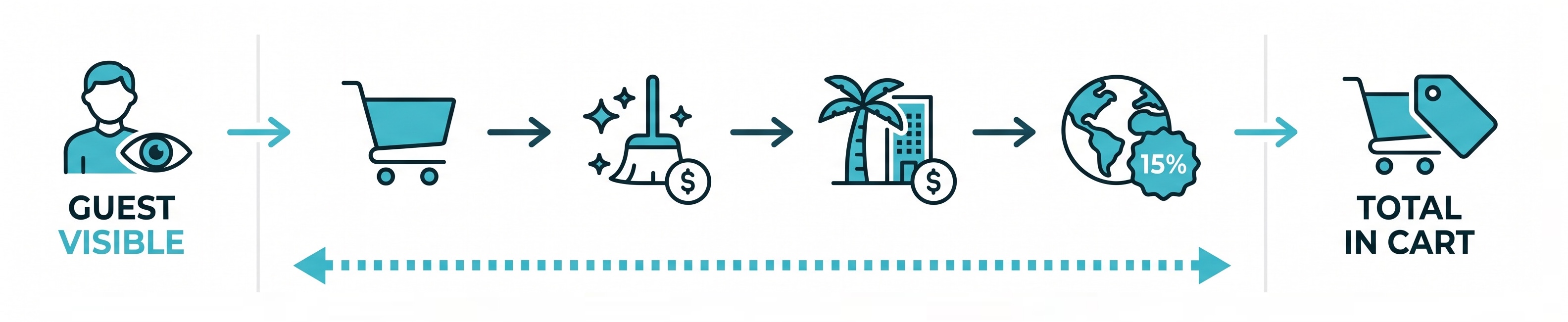
Travelers see these fees on the checkout page, but often not before. Here’s a summary of common visible fees and typical amounts:
| Fee Type | Typical Amount / Range |
|---|---|
| Guest Service Fee | Up to 15% of the subtotal |
| Cleaning Fee | $150 – $400 per stay |
| Resort/Destination Fee | $25 – $65 per night |
| Credit Card Processing | 2.9% – 3.1% of the transaction amount |
| Membership Fee | $99 – $499 per year (if required) |
Examples:
- Guest service fees can be up to 15% of your booking price.
- Cleaning fees are often $150-$400 per stay.
- Resort and destination fees may be $25-$65 per day and paid on-site.
- Credit card processing for renters is often bundled into the “service fee” or charged at 2.9-3.1%.
- Some platforms require an annual membership fee to book, ranging from $99 – $499 per year.
Hidden Costs: What Owners / Hosts Pay

While guests see the above charges, timeshare owners also lose money to platform fees.
| Fee Type | Typical Amount / Range |
|---|---|
| Host/Owner Commission | 15% – 25% of bookings |
| Payment Processing | 3% – 3.1% of payout |
| Flat Posting Fee | $60 – $100 per listing |
- Owners can lose up to 25% of their booking income in platform commissions.
- A 3% – 3.1% card processing fee is standard, deducted from payouts.
- Some sites charge a flat fee of $60 – $100, regardless of whether the property is rented.
Total Platform Take
What does this all mean for both the guest and the owner? Let’s explore an example booking to see how these fees affect the price:
| Example Booking | Guest Pays | Owner Receives | Platform Keeps |
|---|---|---|---|
| Listed Nightly Rate: | $2,000 | – | – |
| Visible Fees (total): | +$400 (20%) | – | – |
| Owner Fees: | – | -$500 (25%) | – |
| Credit Card Processing: | +$60 (3%) | -$60 (3%) | – |
| Membership (if any): | +$99 to $499/year | – | – |
| Final Totals: | $2,560+ | $1,440 | $700+ |
Why This Matters

The combined take for major platforms is often 20% or more of the full booking price. Some of these fees, like commissions and payment processing, are paid by owners or hosts. But owners need to cover their costs and maintain their profit, so they usually raise their nightly rates or add extra charges.
That means, in the end, these costs are simply passed on to guests as higher total prices. Both travelers and owners feel the squeeze, with platforms taking a significant share from both sides.
How to Avoid Paying Excessive Fees
You don’t have to accept high, hidden fees as the cost of renting or listing a timeshare. Here are some ways both travelers and owners can reduce or avoid these costs:
- Compare Total Costs Upfront: Always look for platforms that display the complete price breakdown before you book, including every mandatory fee. Avoid those that hide charges.
- Prioritize Transparent Platforms: Choose websites that separate and explain each fee, so you know what you’re paying for.
- Consider Direct Bookings or Specialist Marketplaces: Some platforms allow direct-to-consumer timeshare rentals with no service or platform fees.
- Skip Membership Requirements: Avoid platforms that charge high annual membership fees just to book.
- Watch for Onsite Resort Fees: Read the listing details and ask about any extra “on arrival” fees that may not appear online. Any timeshare rental should itemize all fees collected at check-out at the resort.
Whether you’re traveling or renting out a timeshare, keeping these tips in mind can keep more money in your pocket.
A Better Way: Transparent Timeshare Marketplaces

You don’t have to use platforms with hidden and shifting fees. There are specialized timeshare rental sites with clearer, smaller fees. These platforms are more honest about what both sides pay, often with lower overhead and no annual membership required.
As a timeshare-focused marketplace, RedTimeshares.com is designed for transparency. It offers lower fees than major travel sites, lets users see exactly what they’re paying, and makes the experience straightforward for owners and travelers alike.
By using a service built for direct-to-consumer timeshare rentals, you avoid the biggest pitfalls of price decoupling and ultimately receive more value in every transaction.