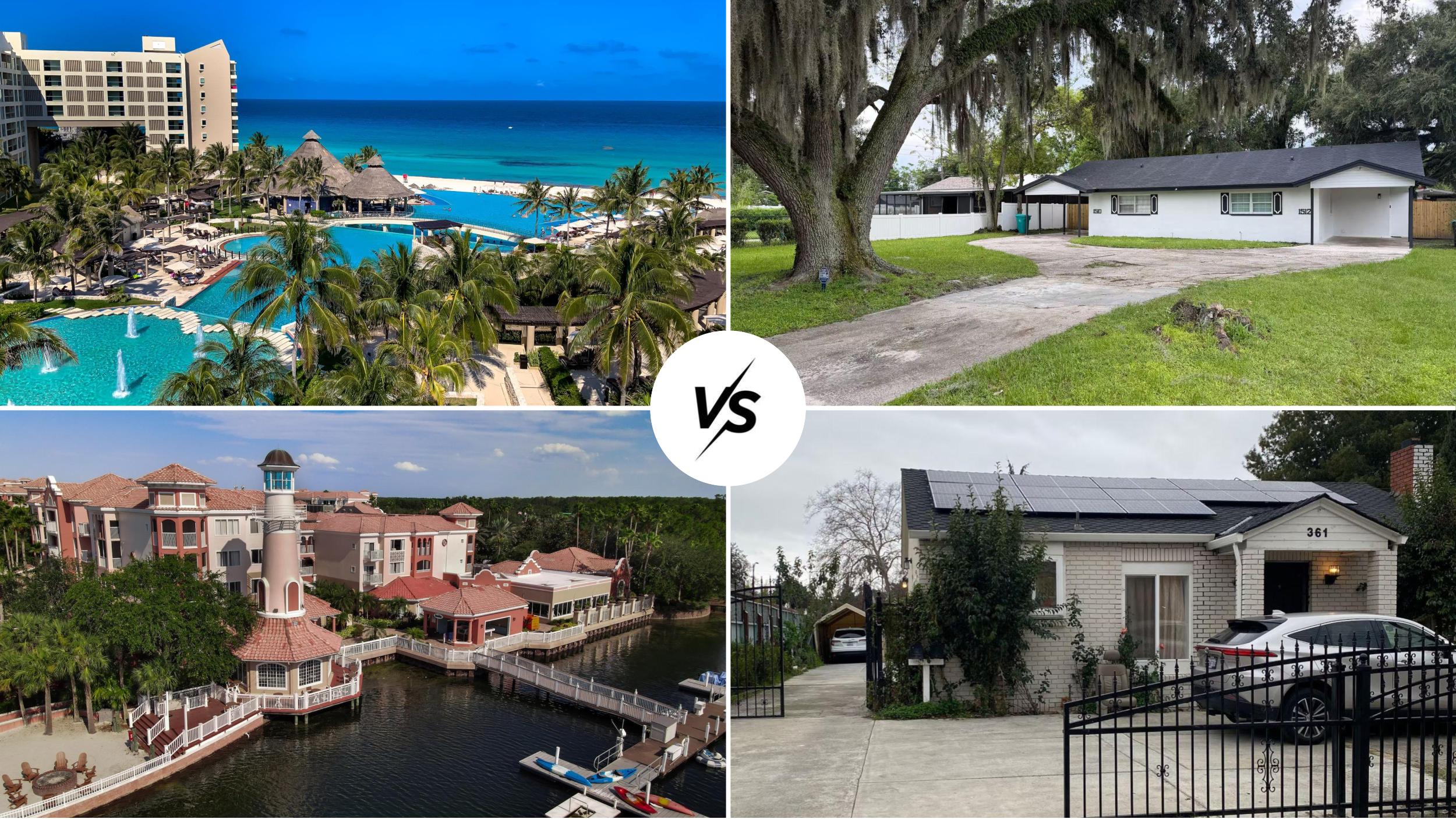
What’s Different About a Timeshare Stay?
Booking a vacation usually means choosing between many different vacation options. Each comes with its own tradeoffs in space, cost, and convenience. For travelers who haven’t rented a timeshare before, understanding what sets this option apart can make the decision a lot easier.
Let’s take a closer look at what to expect when renting your first timeshare rental, and how it compares to the other popular booking methods that travelers choose when planning their next vacation.
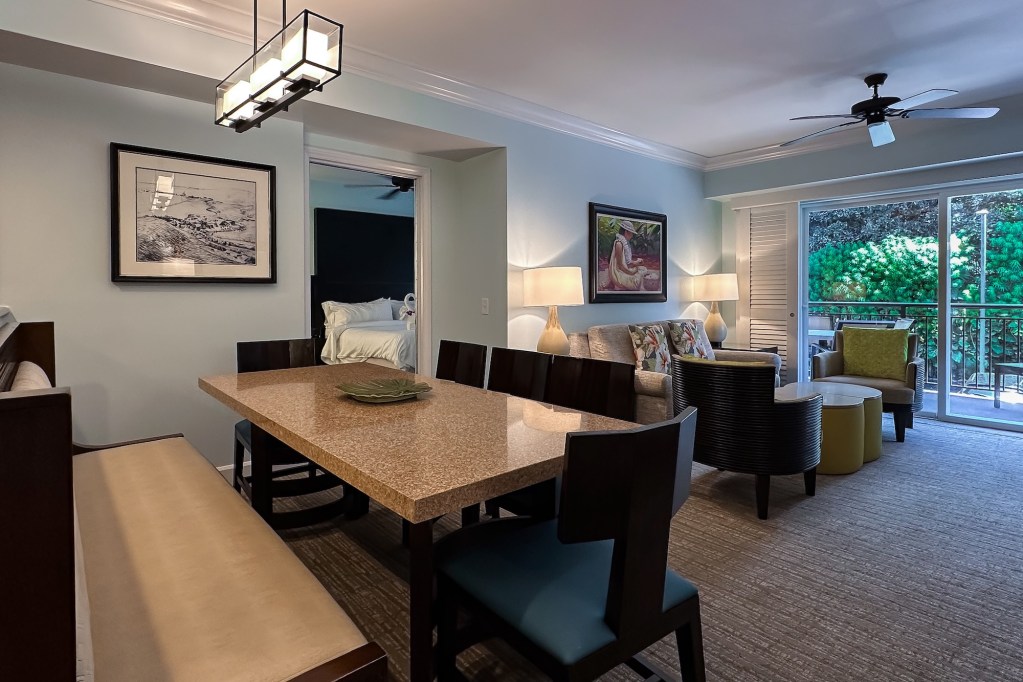
Marriott Waiohai Beach Club 2 Bedroom Living Room
How Much Living Space Does a Timeshare Condo Offer?
A timeshare condo is built more like a residential apartment than a hotel room. Over 80% of timeshare units include a full kitchen and in-unit laundry, features that are rare in a standard hotel room and inconsistent across Airbnb listings.
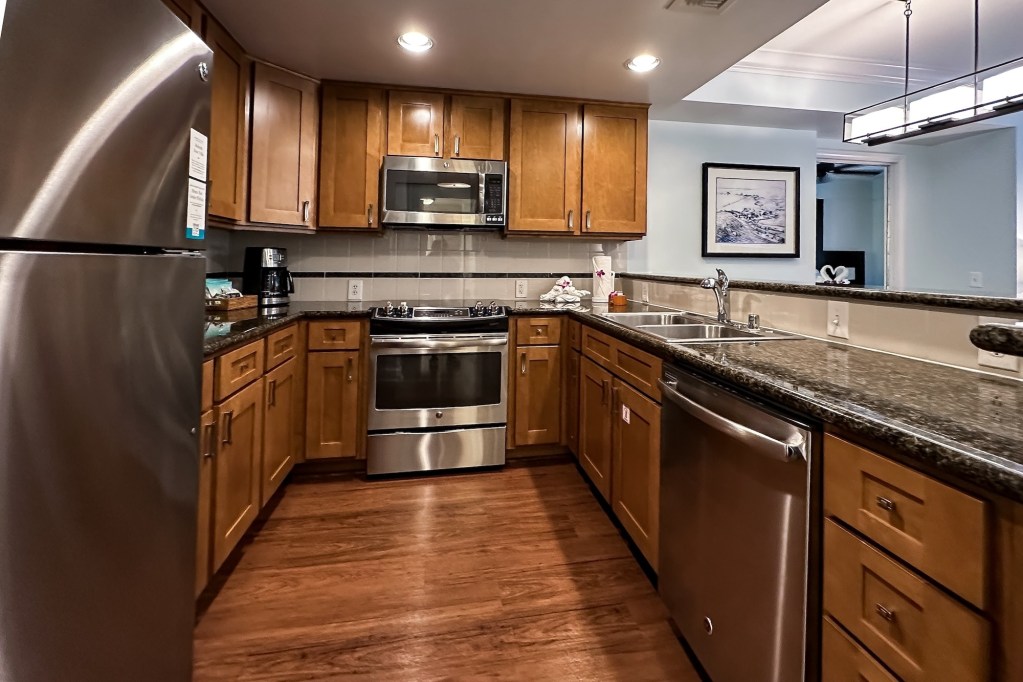
Marriott’s Waiohai Beach Club 2 Bedroom Kitchen
For renters, this translates into a few practical advantages. A full kitchen means the option to cook meals instead of dining out for every meal, which can meaningfully reduce a vacation budget for a family or group.
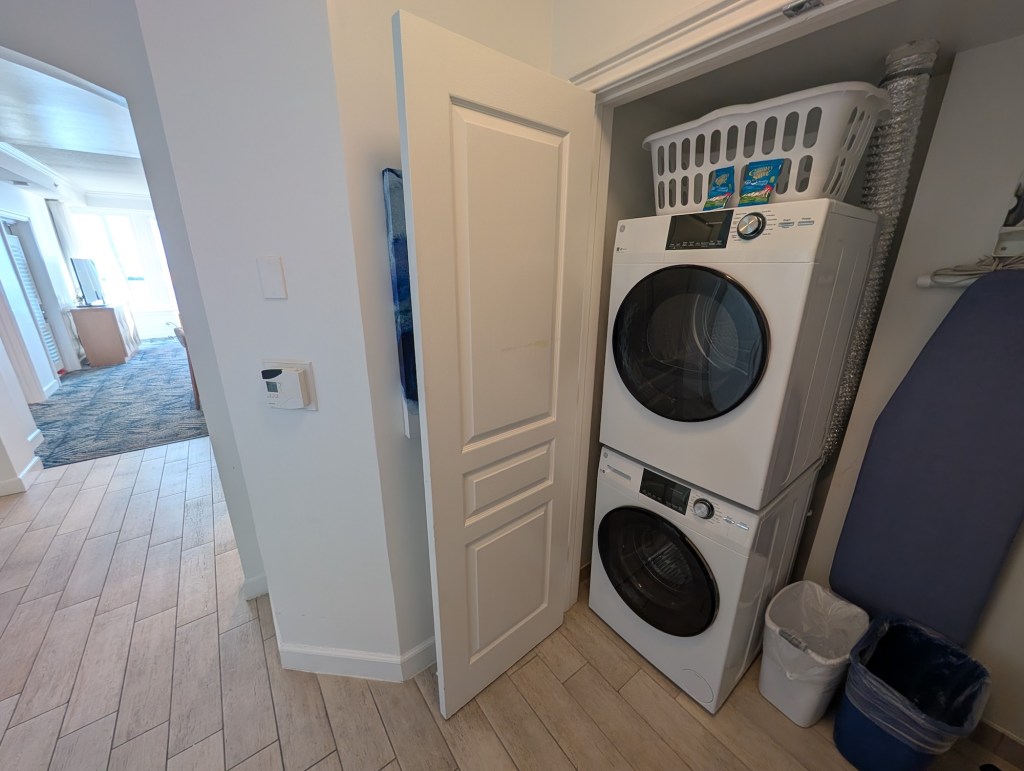
Washer and Dryer at Marriott Ocean Pointe
In-unit laundry means packing lighter, since clothes can be washed partway through a longer stay. And the extra square footage gives everyone in the group room to spread out, rather than sharing one hotel room with limited separation between sleeping and living areas.

View from the Balcony at Hilton’s Lagoon Tower
This setup tends to suit families, multi-generational groups, or anyone planning a stay longer than a couple of nights, where the extra space and self-sufficiency make a tangible difference.

Do Renters Have to Attend a Sales Presentation?
One common misconception is that renting a timeshare comes with an obligation to sit through a sales pitch. That’s not the case when booking through an owner. Renters booking through an owner are not required to attend a sales presentation.
Sales presentations are typically tied to programs run directly by resort brands to attract prospective buyers, not to owner rentals. Renting from an existing owner separates the stay from any ownership sales process entirely. This is worth confirming before booking, since some resort-run promotional stays do carry a presentation requirement as a condition of the discounted rate.

Why Do Timeshare Rentals Use Weekly Reservations?
Timeshare ownership is structured around weekly intervals, and that structure carries over to rentals. Rather than booking a single night or a few scattered days, renters typically reserve a full week, check-in to check-in.
This format offers a different kind of flexibility than a hotel stay. Instead of budgeting per night, renters lock in a set price for seven days, which can simplify trip planning for a longer vacation. It’s an arrangement that works particularly well for travelers who already know they want a full week away, such as a family summer trip or a multi-generational holiday gathering, rather than those looking for a quick weekend stay.
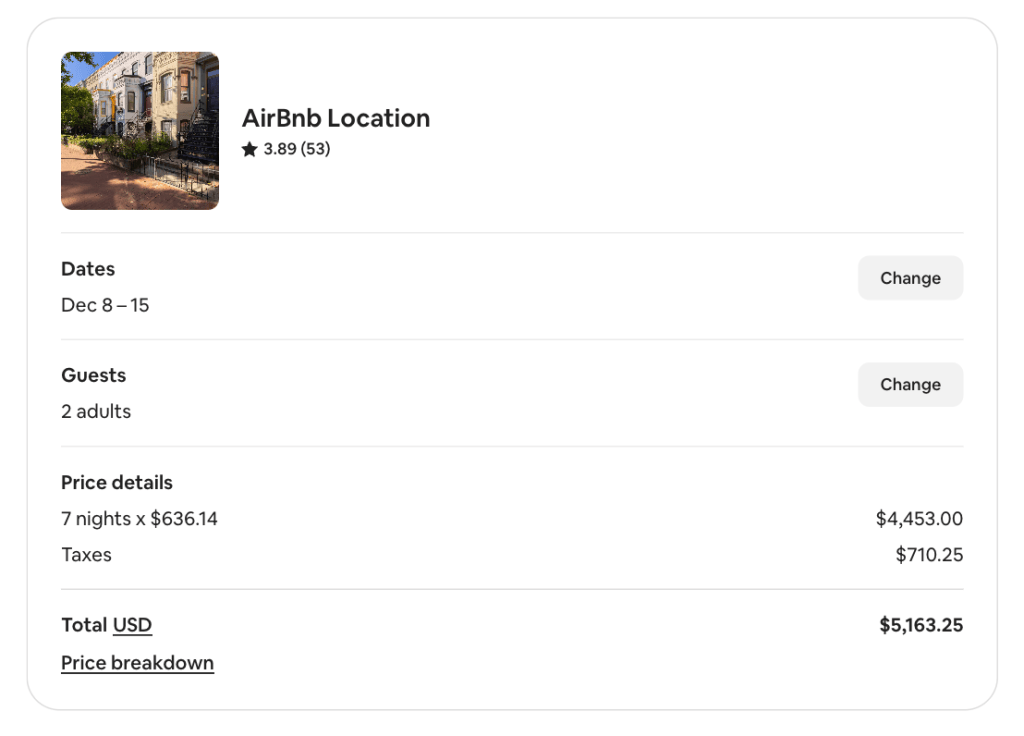
Are Timeshare Rental Fees More Transparent Than Airbnb or Hotel Fees?
Fee transparency is one of the more practical differences between these three options. Airbnb’s guest service fee runs 14.1% to 16.5% of the booking subtotal, on top of a separate cleaning fee that averages around $100 per stay. Hotels often add resort fees or parking charges that aren’t always obvious when booking your stay.
Timeshare rentals booked through an owner tend to avoid this layering of fees. RedTimeshares.com, for example, discloses all resort fees upfront before booking, so the price shown reflects what the renter will actually pay.
There’s also a detail specific to certain brands: some Marriott, Westin, and Sheraton properties charge parking fees of about $25 per vehicle per day to guests who book through the resort brand’s own reservation system. Guests booking through an owner instead receive the owner’s parking rate, which can mean avoiding that daily charge altogether.
How Do Hotels, Airbnb, and Timeshare Rentals Compare?
| Hotels | Timeshares | Vacation Rentals | |
|---|---|---|---|
| Front desk + Concierge | |||
| Resort amenities (on-site pools, spas, restaurants) | |||
| Hospitality brands & cleaning standards | |||
| Multiple bedrooms + Large living areas | |||
| Full or Partial kitchens | |||
| Pricing determined by owners |
Hotels offer convenience and predictability. Airbnb offers variety and a home-like feel. Timeshare rentals sit somewhere in between, offering resort-style amenities with residential-style space, but with a few distinctions renters should know before booking.
The most noticeable difference is size. According to industry data from the American Resort Development Association (ARDA), the average timeshare unit exceeds 1,000 square feet, while the average hotel room measures between 300 and 400 square feet. That’s roughly three times the space, often split across a separate living area, bedroom, and kitchen.
Pricing structures also differ. Hotels charge nightly rates that can climb with resort fees and taxes. Airbnb charges a guest service fee, generally 14.1% to 16.5% of the booking subtotal, plus a cleaning fee that averages above $100 per stay. Timeshare rentals booked through an owner, such as those listed on RedTimeshares.com, typically show all resort fees upfront before booking, so there are fewer surprises at checkout.
Choose the Stay That Fits the Trip
A timeshare rental won’t suit every trip. A one-night stopover probably calls for a hotel, and a solo traveler might prefer the flexibility of a short Airbnb booking. But for a longer stay, a group that wants room to spread out, or a family that wants to cook a few meals rather than eat out every night, the combination of space, full kitchens, and upfront pricing makes a real difference.
Renters interested in seeing what’s available can browse current listings on RedTimeshares.com to compare unit sizes, locations, and pricing for an upcoming trip.